Media
Interview with Yiğit Laçin
From Level 2 to Level 3+ in just three years, YDA Dalaman Airport has made carbon management an integral part of its operations. In this interview, Yiğit Laçin discusses the measures behind this progress, from the airport’s 14.445 MWp rooftop solar power plant and energy efficiency measures to fleet electrification and collaboration with airlines and other stakeholders. He also shares YDA Dalaman Airport’s plans for further decarbonisation and its experience of using renewable energy and digital solutions to support lower carbon airport operations.
YDA Dalaman Airport joined Airport Carbon Accreditation in 2023 and, within three years, progressed to Level 3+. What were the key strategies and actions that enabled this progress, and what did the journey involve on a practical, day to day level?
YDA Dalaman Airport entered the Airport Carbon Accreditation programme directly at Level 2 in 2023. This reflected the fact that we already had a clear system in place for measuring emissions and reducing our environmental impact.
Our progress to Level 3+ has been possible because we have made carbon management part of our daily airport operations, rather than treating it simply as a certification process. We prepare annual energy and emissions reduction plans, continuously improve our data collection and monitoring, assign clear responsibilities across departments and regularly review our environmental performance.
In practice, this requires close cooperation between our engineering, operations, environment, finance, asset management, mechanical, electrical and building maintenance teams. Energy consumption and carbon emissions are now considered as part of our technical planning and investment decisions.
Our Solar Power Plant has been the largest element of this journey, but it is part of a much broader approach to sustainability. We have, for example, replaced the lighting throughout the terminal with LED technology and connected the system to our building automation system. This allows us to adjust lighting according to operational needs and avoid unnecessary energy consumption.
We have also started replacing vehicles used by management and airport operations with electric vehicles as part of the gradual electrification of our fleet.
The seasonal nature of Dalaman Airport also gives us opportunities to improve efficiency. During the quieter winter period, when passenger traffic is lower, selected parts of the terminal are temporarily closed. This allows us to manage energy, water and staff resources more efficiently while maintaining the required level of service.
For the remaining emissions during the transition period, we used I-REC certificates and VERRA certified carbon credits in 2025. However, our priority has always been to reduce emissions directly through energy efficiency measures and renewable energy generated at the airport.
Moving from Level 2 to Level 3+ required strong management support, reliable data, cooperation between departments and, above all, a clear long term plan.
 Reaching Level 3+ requires engagement with third party stakeholders, alongside a commitment to net zero emissions for Scope 1 and 2. How has YDA Dalaman Airport approached collaboration with partners on this front, and are there specific sustainability projects or policies that are shaping this relationship over the longer term?
Our sustainability work depends on close cooperation between our employees, management, shareholders, public authorities, energy companies and aviation partners.
For the Solar Power Plant, we worked closely with national energy authorities, energy providers and grid operators on permits, legal requirements and the grid connection. We also worked with the State Airports Authority, customs, police and security teams to ensure that the project could be delivered safely without affecting airport operations.
The first phase of the Solar Power Plant was developed and completed by our own technical teams. For the second phase, we worked with Fons Solar, combining our knowledge of airport operations with their expertise in solar energy.
We also work directly with our aviation partners to reduce unnecessary aircraft APU use. Our aim is to encourage APUs to be switched off whenever they are not operationally required. This is a good example of an area where the airport cannot reduce emissions on its own and where cooperation with stakeholders is essential.
Airlines, tenants and other business partners are also part of our longer term carbon reduction plans. We want to raise environmental awareness and bring our partners closer to the airport’s sustainability goals.
Renewable energy and carbon reduction are therefore becoming an increasingly important part of how we work with the wider airport community. Looking ahead, we aim to deepen this collaboration through more transparent energy performance monitoring, stronger stakeholder communication and joint initiatives that support emissions reductions across the wider airport ecosystem.
You have recently completed the second phase of your rooftop Solar Power Plant investment, now meeting 100% of the terminal building’s electricity demand through solar power generated on site. Could you share some of the figures behind this achievement, such as the plant’s capacity, annual output and the volume of emissions this displaces each year?
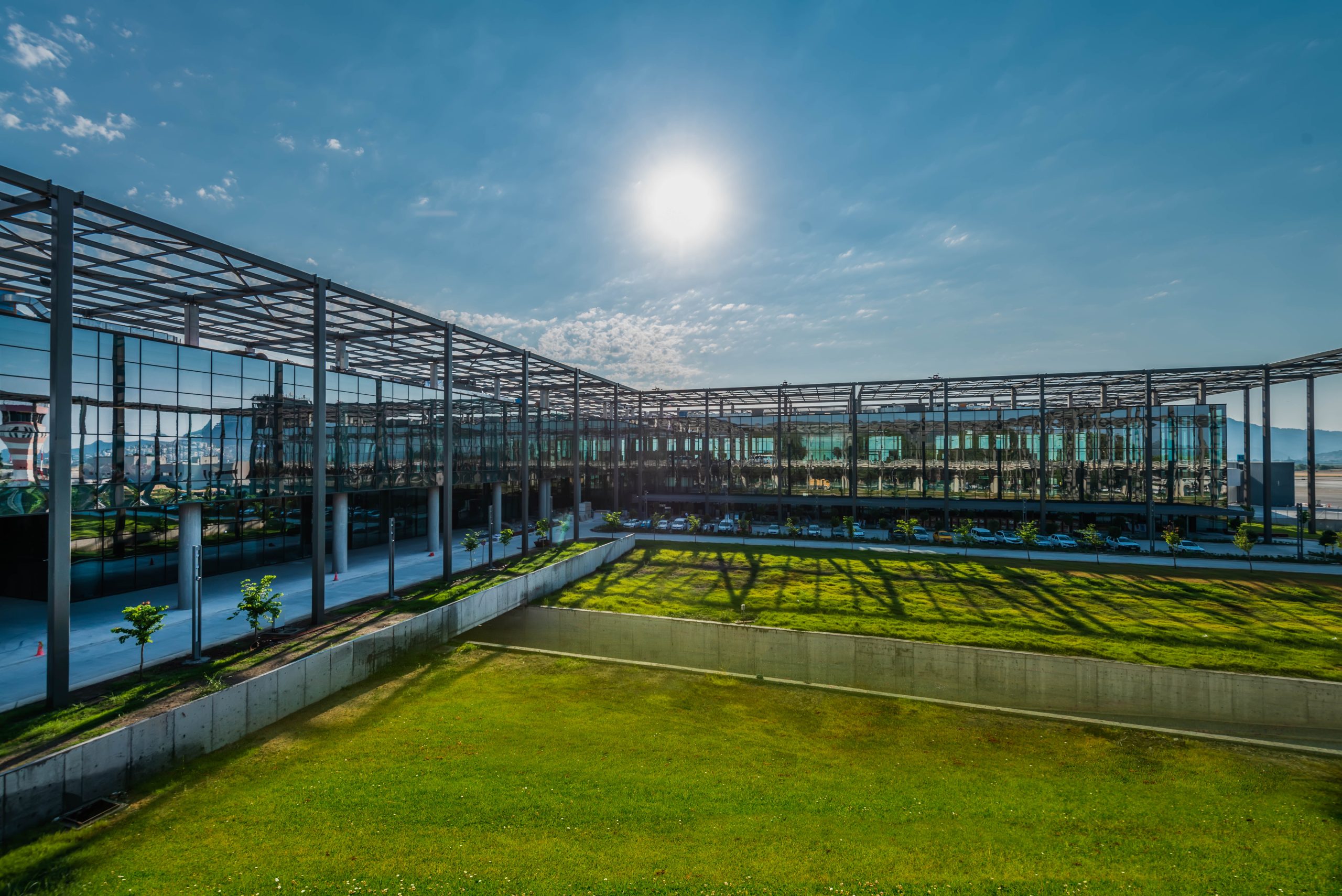
With the completion of the second phase, our rooftop Solar Power Plant has reached a total installed capacity of 14.445 MWp DC.
The system includes 25,500 solar panels installed across approximately 73,500 square metres of terminal rooftop area.
The plant is expected to generate more than 20,000 MWh of renewable electricity each year, enough to meet 100% of the terminal building’s annual electricity demand through solar power generated on site.
The project eliminates the Scope 2 emissions associated with the terminal’s electricity consumption and is expected to avoid approximately 8,500 tonnes of CO₂ emissions each year. This is equivalent to the carbon capture capacity of around 380,000 trees.
The project also provides benefits beyond renewable electricity generation. The panels are installed on an elevated steel structure above the terminal roof, providing passive shading to skylights, glazed façades and other exposed parts of the building.
In this way, the project brings together renewable energy generation, emissions reduction, improved cooling performance and better energy management in a single investment.
Looking ahead, what decarbonisation projects does YDA Dalaman Airport plan to pursue as part of its future strategy? Are there particular technologies or practices you are exploring that might offer inspiration to other airports in the region, and do you have ambitions to progress further within the Airport Carbon Accreditation programme?
Our next priority is to improve how we monitor and manage energy across the terminal.
We plan to further develop our energy monitoring and automation systems, allowing us to analyse consumption patterns, renewable energy generation and operational efficiency in greater detail. Better integration between energy data, building systems and operational planning will help us identify further opportunities to reduce consumption and respond more effectively to changing demand.
We are also exploring the potential use of artificial intelligence in energy management. Possible applications include demand forecasting, anomaly detection, predictive maintenance and optimisation of HVAC and other high consumption building systems. These technologies could help us move from simply reporting energy use to managing it in a more predictive and responsive way.
The wider electrification of airport operations will also remain an important area of focus. This includes the continued adoption of electric vehicles and the use of Solar Power Plant powered charging infrastructure for both operational and passenger facing applications.
From an Airport Carbon Accreditation perspective, we intend to continue progressing within the programme in line with our operational roadmap, verified performance and long term decarbonisation strategy.
Our aim is to demonstrate how renewable energy, automation, digital systems and teamwork can provide a practical route towards lower carbon airport operations.
 With Türkiye hosting COP31 later this year, what significance does this moment hold for YDA Dalaman Airport and for Turkish aviation more broadly?
Türkiye hosting COP31 is an important opportunity to showcase the country’s progress in renewable energy, low carbon infrastructure and sustainable aviation.
For Turkish aviation, COP31 can bring greater international attention to projects that are already delivering clear and measurable results. Airports are highly visible parts of national infrastructure and can demonstrate how climate goals can be translated into practical projects and changes in day to day operations.
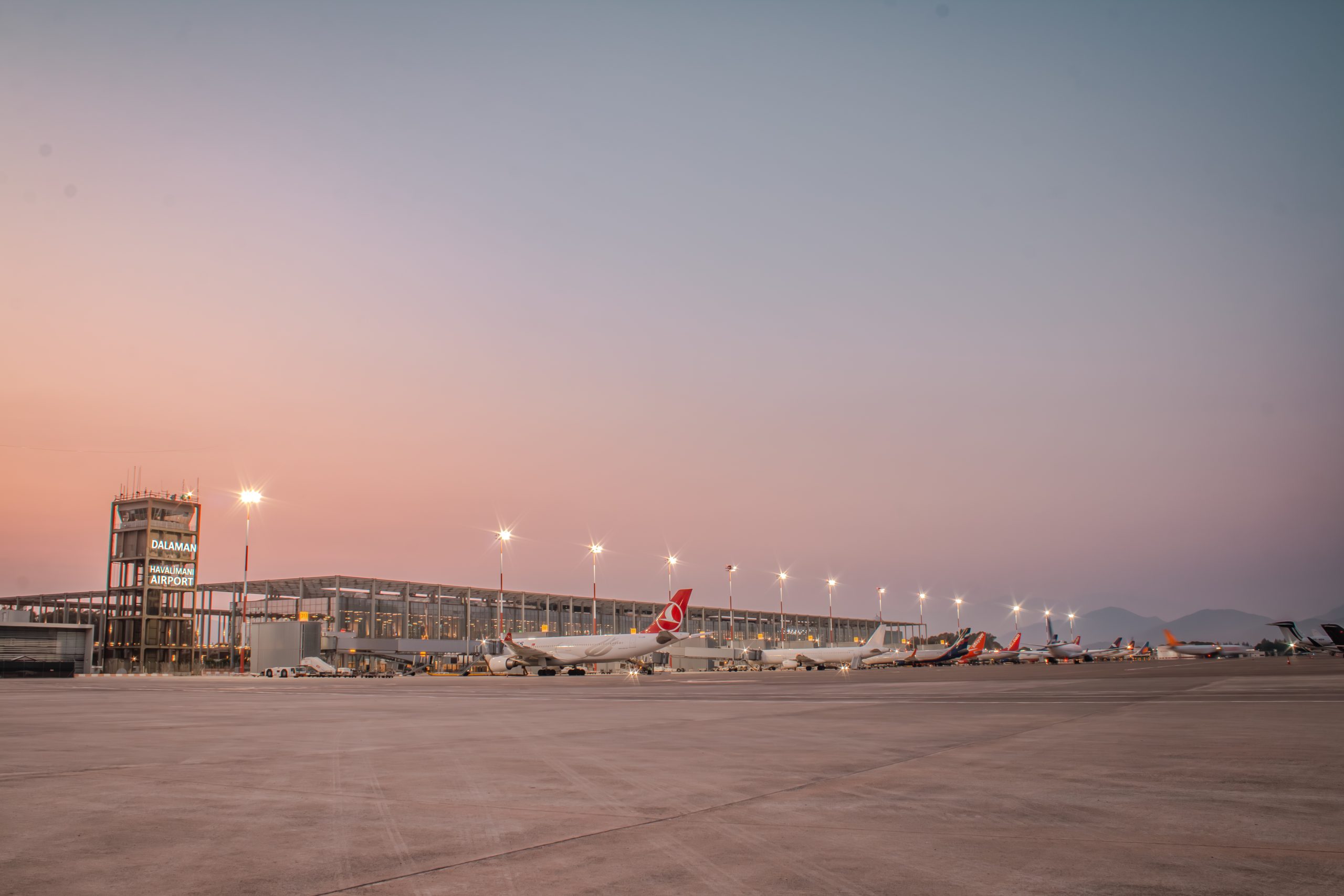
For Dalaman Airport, this is particularly relevant because our Solar Power Plant provides a concrete example of direct decarbonisation through on site renewable energy. It demonstrates how a large international terminal with strong seasonal demand can meet its full annual electricity requirement through rooftop solar generation.
COP31 also provides an opportunity for greater knowledge exchange between airports, public authorities, technology providers and international aviation organisations. Sharing practical experience, successful approaches and lessons from implementation can help accelerate similar projects across Türkiye and the wider region.
More broadly, we believe the event can help showcase Turkish aviation’s practical experience and the potential for solutions developed in the country to be applied more widely.
Finally, what advice would you give to airports that are just starting out, or looking to move further along their decarbonisation journey within Airport Carbon Accreditation?
Our first recommendation would be to start with accurate data and clear responsibilities. Airports need to understand where their emissions come from, which activities they can directly control and where cooperation with external stakeholders is needed.
The next step is to turn the emissions inventory into a clear action plan. It is usually most effective to focus first on measures that combine environmental impact with operational and financial value, such as renewable energy, energy efficiency, electrification and better monitoring.
It is also important to remember that carbon reduction does not always require major investment. Better control of lighting, adapting terminal operations to seasonal demand and working with airlines to reduce unnecessary APU use can all deliver meaningful results.
Management support is essential, but progress also depends on involving technical and operational teams from the beginning. Decarbonisation should not be the responsibility of a single sustainability function. It needs to become part of engineering, finance, procurement, asset management and day to day operations.
Airports should also work closely with airlines, ground handlers, public authorities, energy providers and other partners. Many emissions sources and operational challenges cannot be addressed by the airport operator alone.
Finally, we would encourage airports not to view Airport Carbon Accreditation simply as a certification target. The programme is most valuable when used as a structured framework for measuring progress, strengthening accountability and turning long term climate ambitions into practical action.
Starting with achievable steps is important, but those steps should form part of a longer term strategy. Consistency, reliable data and continuous improvement are more important than trying to deliver every initiative at once.
If you liked reading this, you might also enjoy: