


Media
Natal Airport joins Airport Carbon Accreditation, aligning its carbon management strategy with global climate goals
octubre 15, 2026
Natal International Airport in Brazil has joined Airport Carbon Accreditation directly at Level 4, aligning its carbon management strategy with global climate goals and placing absolute emissions reductions at the centre of its operations. The airport’s accreditation recognises its work to reduce greenhouse gas emissions, strengthen engagement with stakeholders and pursue a long term path towards Net Zero.
Operated by Zurich Airport Brasil, Natal joins Florianópolis, Vitória and Macaé in achieving Level 4 of the programme. This means that all four airports operated by the concessionaire are now accredited at this level, reflecting a shared commitment to more ambitious carbon management across its Brazilian operations.
Natal Airport has set a target to achieve Net Zero emissions by 2040, supported by a strategy aligned with the Paris Agreement and the recommendations of the Intergovernmental Panel on Climate Change (IPCC). Its progress is already measurable. Between 2024 and 2025, the airport reduced its emissions from 1,668 tonnes of CO₂e to 738 tonnes of CO₂e, a decrease of approximately 56%. This reduction was achieved through the use of 100% renewable electricity, energy efficiency measures and improvements to the airport’s air conditioning systems.
A key initiative is the installation of 400 Hz ground power and Pre-Conditioned Air (PCA) systems, which supply electricity and climate control to aircraft at the stand. By reducing the need for auxiliary power units (APUs) powered by fossil fuels, the systems help cut emissions associated with aircraft on the ground. Operational since 2025 and used by all airlines serving the airport, the equipment has already delivered measurable benefits. Since its implementation in May 2025, it has prevented an estimated 1,616 tonnes of CO₂e in Scope 3 emissions from airlines.
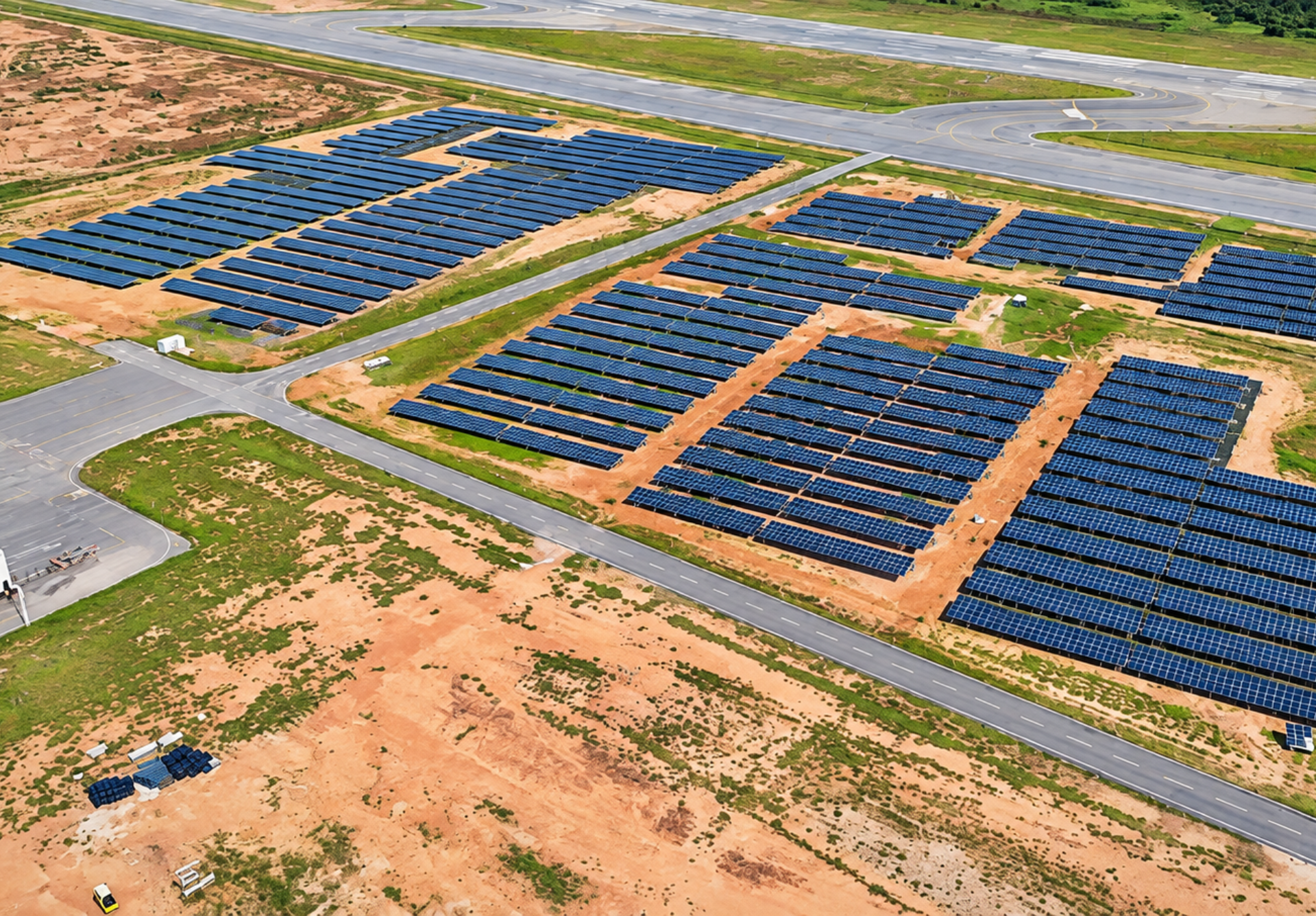
Natal is also investing in renewable energy generation. The airport is finalising plans for a photovoltaic solar power plant, representing an investment of R$24 million. Expected to be inaugurated at the end of the year, the plant is intended to increase the airport’s energy self sufficiency and provide a further source of clean electricity for its operations.
Commenting on the achievement, Ricardo Gesse, CEO of Zurich Airport Brasil, said: “This result is a very important achievement for what we want in our airports: efficient, sustainable and surprising operations. In Natal, this recognition is even more celebrated, since Rio Grande do Norte is known to be a green destination, being a major producer of clean and renewable energy, in addition to having great ecosystems and biodiversity in its territory.”
Find out more about sustainability at Zurich Airport Brasil here.

