


Media
The busiest airport in the United States achieves Level 2 of Airport Carbon Accreditation
octubre 8, 2025
Hartsfield-Jackson Atlanta International Airport, the busiest airport in the United States and in the Airport Carbon Accreditation programme, operated by the Atlanta Department of Aviation, has achieved Level 2. The airport has demonstrated well-defined carbon management practices and clear target setting, resulting in a significant reduction in Scope 1 and 2 emissions.
The airport adopted a carbon policy in 2021 that aligns with the City of Atlanta’s goal to transition to 100% clean and renewable energy by 2035, while also supporting ACI’s long-term objective of net zero carbon by 2050. To deliver on these commitments, Hartsfield-Jackson Atlanta International Airport has implemented energy efficiency measures across its operations, including the conversion of interior and exterior lighting to LED, achieving average reductions in energy consumption of 28% in capital development projects, and establishing a retro-commissioning programme to improve operational efficiency. On-site solar panels, installed in 2017, generate around 103 kWh of renewable energy annually, complementing efforts to expand renewable energy use.
Sustainable building standards have been integrated into all major construction and renovation projects, with the airport pursuing LEED, Envision and Parksmart certifications to ensure lasting performance gains. At the same time, the airport has created a universal database for utility consumption and billing, incorporating building management and sub-meter data to better track and manage energy use.
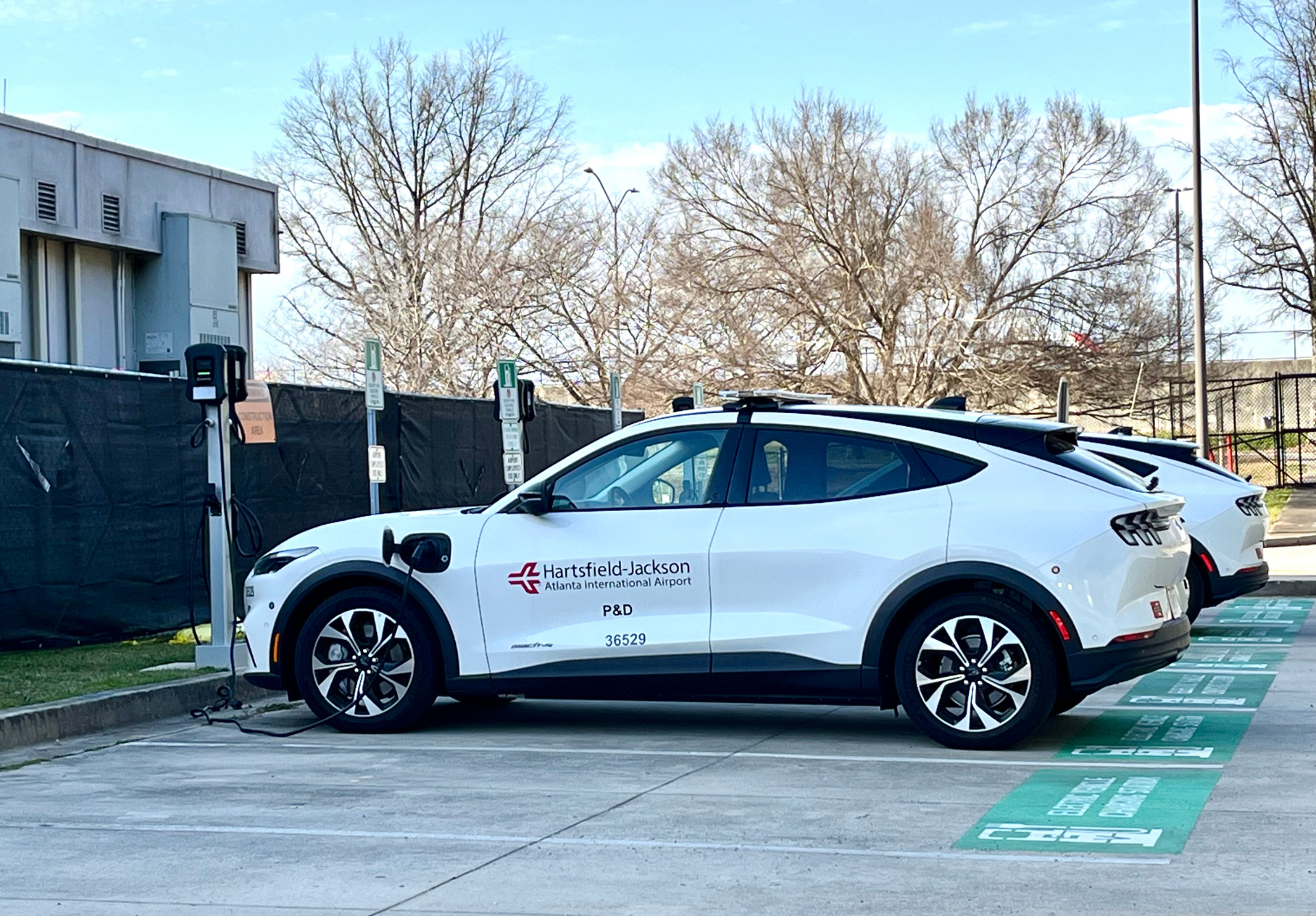
Clean transportation is another priority for Hartsfield-Jackson Atlanta International Airport. Through its capital improvement programme, ATLNext, all new facilities are equipped with electric vehicle charging stations, with at least 20% of new parking spaces made EV-ready. The airport also continues to electrify and diversify its ground fleet. In 2023, this included 73 CNG shuttle buses, two CNG refuse trucks, two electric ATLConnect buses for terminal-to-terminal operations, and several electric administrative vehicles, supported by an on-site CNG refuelling station.

