


Media
Salvador Bahia, Adelaide, Parafield, and Mumbai airports reach net zero for emissions under their control in the timespan of COP30
diciembre 17, 2025
In an important moment for Airport Carbon Accreditation, four airports have recently reached Level 5, the programme’s highest level, bringing the total number of pioneer airports globally at this level to 30. Salvador Bahia Airport in Brazil, together with Adelaide and Parafield airports in Australia, achieved Level 5 during COP30 in Brazil, reaching net zero emissions for all activities under their direct control. Shortly after COP30, Chhatrapati Shivaji Maharaj International Airport in India also secured Level 5, reinforcing the growing global momentum towards net zero airport operations.
Salvador Bahia Airport, operated by VINCI Airports, has become the first airport in Brazil and the Americas to reach Level 5. The airport now produces clean electricity through two photovoltaic plants with a combined capacity of 6 MWp, covering its own operations and part of its cargo area. It has transitioned fully to renewable energy, replaced gas-powered equipment with electric alternatives, and converted its vehicle fleet to electric or biofuel. Residual emissions are addressed through certified carbon sequestration projects, including support for a 3,879-hectare reforestation initiative in the Corumbá region. Salvador Bahia Airport has also become the first in Brazil to supply Sustainable Aviation Fuel (SAF) for commercial flights, enabling two daily services to operate with a 10% SAF blend.
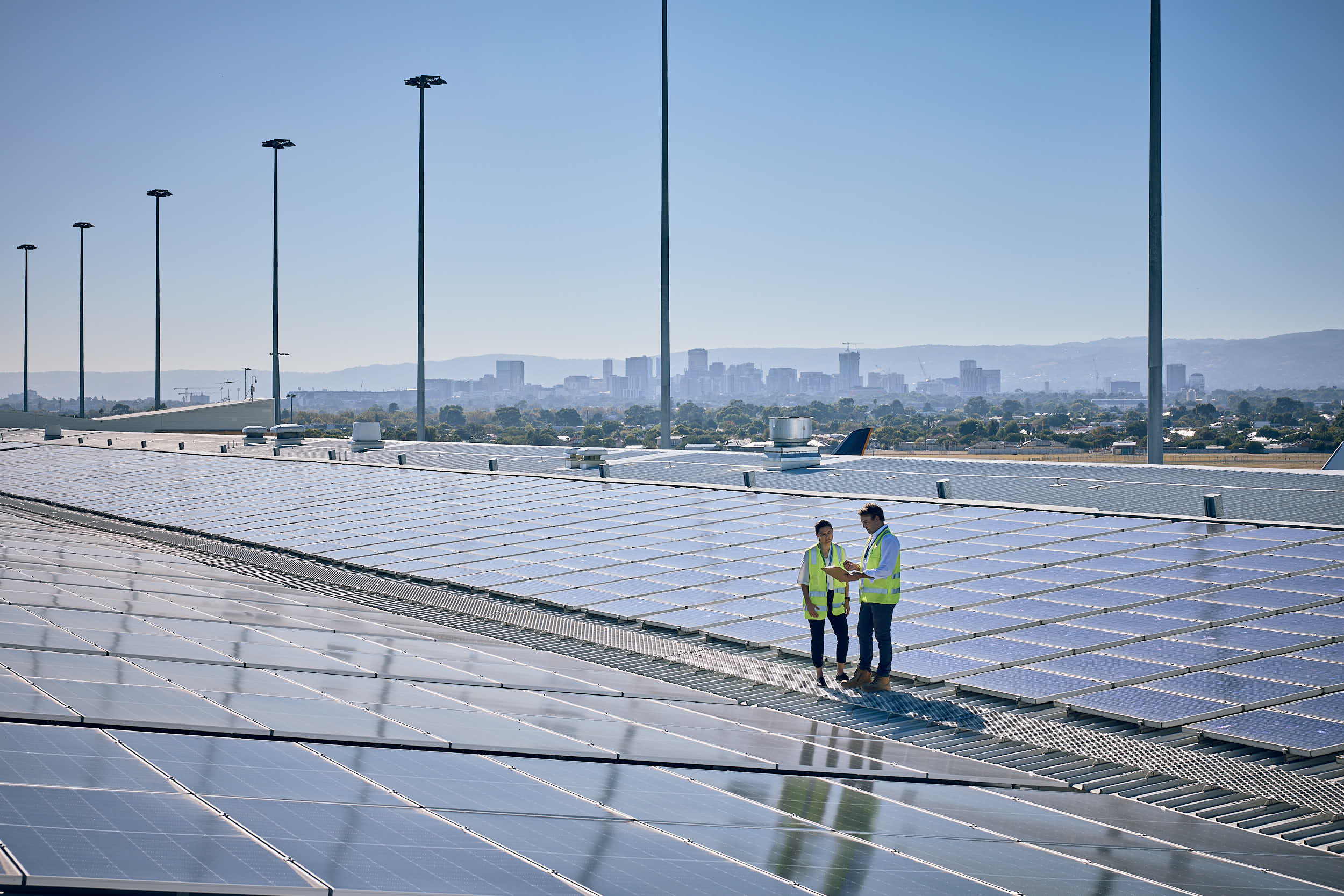
Adelaide and Parafield airports are the first in Australia to achieve Level 5, bringing the total number of Level 5 airports in Asia-Pacific and the Middle East to seven. Adelaide Airport now generates more than 15% of its terminal electricity demand from onsite solar installations, while both airports have cut electricity use through extensive LED upgrades and energy-efficient equipment replacement. Remaining electricity needs are supplied through a renewable power purchase agreement linked to a South Australian wind farm. Both airports continue to encourage the uptake of Sustainable Aviation Fuel by maintaining open access to their fuel infrastructure and providing commercial incentives for airline partners.
Chhatrapati Shivaji Maharaj International Airport has become the fourth airport in India to achieve Level 5, following sustained investment in carbon reduction, strong sustainability governance, and a data-driven decarbonisation strategy. Since August 2022, the airport has operated entirely on renewable electricity, significantly reducing its operational emissions, while major energy efficiency upgrades including Electronically Commutated fans, LED lighting and high efficiency heating, ventilation and air conditioning systems have further lowered its carbon footprint. The full electrification of the vehicle fleet, strict control of refrigerant leaks, upgrades to automation systems and the introduction of CO₂ based fire protection systems have reinforced these efforts, supported by an updated environmental, social and governance policy adopted in May 2025.
You can find below the Press Releases from the airports:

